Begin before the first drawing
A project usually needs a proposition: what is being made, for whom, in what format and with which resources? An adaptation also requires attention to the underlying work and permissions. An original project needs its own development process. Producers may discuss staffing, finance, release opportunities and creative direction while the proposition is still changing.
Greenlighting is therefore not simply a director deciding to animate a story. Commercial and creative commitments intersect. The exact order differs between television series, features, short films and other formats. Public announcements rarely disclose the complete history of those commitments or all the planning that preceded them.
Script and design
Establish what happens, who appears and the visual rules the production will share.
Storyboard and layout
Translate story into shots, then resolve staging, camera relationships and spatial detail.
Animation and image finishing
Develop movement and combine character, background and visual-effect elements.
Sound, checks and delivery
Complete the audiovisual work and prepare materials for the intended outlet.
Plan shots, not just pictures
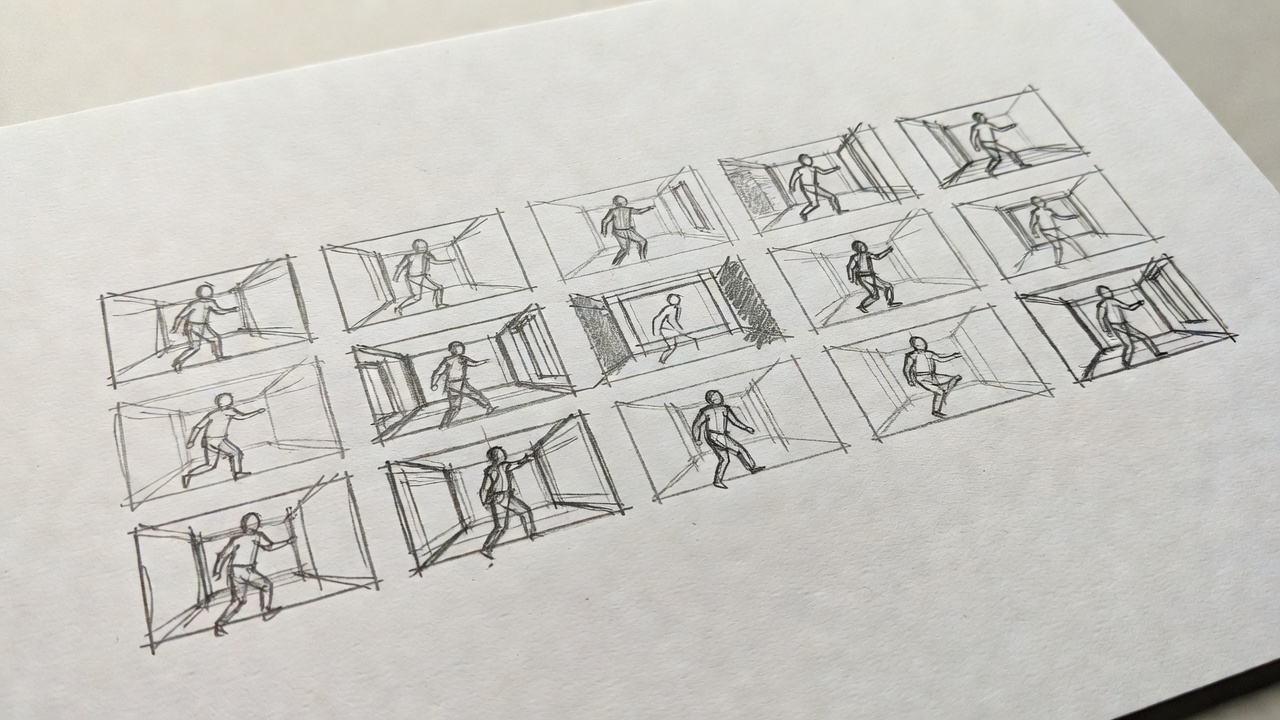
Scripts organize dramatic material, but animation also needs decisions about screen time and visual presentation. A storyboard, often called an ekonte in Japanese production contexts, sets out shots, action and timing information. It can communicate camera movement, dialogue placement and transitions. Its level of detail varies with the creator and the production.
Character, prop and setting designs give contributors shared references. These references do not eliminate interpretation; they help make interpretation consistent. Layout work then develops the composition and spatial organization of a shot. Character positions, perspective and background requirements must agree well enough for separately produced elements to meet.
Build movement through collaboration
Key animation establishes important poses and movement decisions. Depending on the workflow, later passes may develop rough drawings, resolve detail or prepare material for in-between work. In-between animation supplies drawings that connect specified poses, while checks help maintain the intended shapes and movement. These are skilled contributions, not merely automatic gap filling.
An animation director may review and correct drawings for consistency or expression. The English term can be misleading: this role is not simply the overall director of the film. Several animation directors may contribute to an episode, and a chief animation director may supervise consistency across a broader span. Credits identify responsibilities but do not disclose how much correction occurred on each shot.
The pipeline is a map of dependencies, not a promise that every department finishes before the next begins.
Bring separate image elements together
Background art establishes environments and atmosphere. Digital color work applies the production's color decisions to prepared drawings. Computer-generated elements may contribute vehicles, sets, crowds or complete characters. Productions can combine two-dimensional and three-dimensional methods in ways that are difficult to separate by looking at the finished frame alone.
Compositing combines image layers and controls aspects such as light, focus, transparency and effects. Japanese credits may use a term conventionally translated as photography, even when no physical camera photographs animation cels. The historical label should not be mistaken for a description of the current tools. Editing organizes the sequence and duration of shots; picture and sound work may influence one another as materials develop.
Finish for a real delivery requirement
Voice recording, music and sound effects contribute performance, rhythm and space. Recording does not happen at an identical point on every production. A session may use incomplete imagery or other reference material, so a universal claim that voices always come before or after animation would be unreliable.
Final checks and delivery involve more than declaring the creative work finished. A broadcaster, distributor or platform may require particular picture, audio, subtitle and metadata materials. Fixes can travel back through earlier stages. Multiple episodes may be active at once, and outsourced work introduces further handoffs. None of these facts alone establishes whether a particular schedule was healthy or a particular team was overworked.
Sources and next steps
For broader industry context, consult the Association of Japanese Animations. For creator-focused material, explore JAniCA, noting that much of its material is in Japanese. Project-specific making-of publications and named staff interviews can add detail, but their statements should remain tied to the production being discussed.